

A Practical Brake Service Roadmap for Sioux Falls, SD Drivers
Vern Eide – A Practical Brake Service Roadmap for Sioux Falls, SD Drivers
Brake systems are safety systems first — and few places test them like Sioux Falls. From daily stoplights on 41st Street and Louise Avenue to quick merges onto I-229, your pads and rotors endure repeated heat cycles that expose any weakness. If you have noticed a new squeal in morning traffic or a steering wheel shimmy when decelerating from highway speeds, it is time to move from guesswork to a plan. This practical roadmap explains brake noises, what a thorough service includes, and how to time maintenance around your routine.
Common brake noises decoded in Sioux Falls traffic
Not all sounds mean the same repair. The thin, high-pitched squeal you hear when lightly pressing the pedal at lower speeds often points to pad wear indicators. A coarse grinding, however, suggests pad material is gone, and metal backing plates are contacting rotors — a problem that escalates quickly. A rhythmic chirp that changes with wheel speed can signal a small pebble or shield interference, common after drives on county gravel roads. Meanwhile, a thunk at the end of a stop can be loose hardware or pad movement within the bracket. Listening closely and noting when, where, and how the noise occurs helps a technician pinpoint the root cause faster.
- Squeal on gentle stops: Pad wear indicators touching the rotor surface.
- Grinding under hard braking: Pads worn to metal, damaging rotors.
- Steering wheel vibration: Rotor thickness variation or heat spots.
- Clunk at final stop: Loose hardware or pad fitment issue.
- Pulsing pedal without noise: Rotor runout or ABS modulation on slick patches.
Documenting the speed, pedal pressure, and whether the steering wheel vibrates helps distinguish pad, rotor, or caliper concerns. Share those notes when you schedule; it saves time and gets your inspection targeted from the first look.
What a professional brake service actually includes
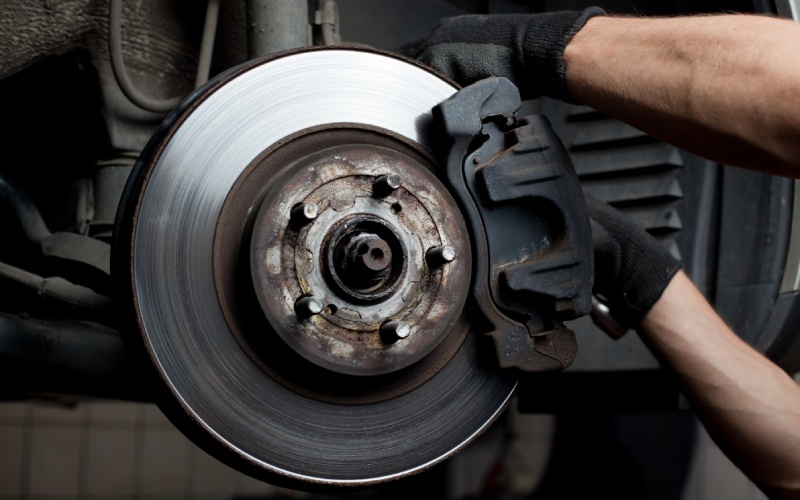
Brake service begins with a wheel-off inspection: measuring pad thickness, checking rotor condition with a micrometer, confirming caliper slide freedom, and assessing hoses and dust boots. If rotors are within spec and surfaces are even, machining may restore a smooth finish; otherwise, rotors should be replaced in axle sets to prevent imbalance. Proper hardware — abutment clips and shims — matters, too; it reduces noise and enables even pad movement. Finally, brake fluid is tested for moisture. If the boiling point is low, a fluid exchange restores pedal consistency during repeated stops across town or on I-29.
- Pad and rotor assessment: Measure, compare to spec, and determine machine vs. replace.
- Caliper and slide service: Clean, inspect, and lubricate contact points.
- Hardware refresh: New clips/shims to prevent noise and uneven wear.
- Brake fluid test and exchange: Verify moisture; restore boiling point if degraded.
- Torque and road test: Torque lugs to spec and validate braking on the street.
Each step works together — precise measurements, clean hardware, and correct torque are how you get quiet, linear stops that last. This is also how a shop stands behind its work confidently.
How often Sioux Falls drivers need brake work
Intervals vary widely. City driving means more pedal presses per mile than highway cruising, so pads can need replacement at 30,000 to 40,000 miles. Highway-heavy commuters might see 50,000 to 60,000 miles. Trucks that tow, vehicles with larger wheels, and stop-heavy routes shorten that window. If you live or commute near Harrisburg, SD and frequently move between residential streets and busy arterials, plan on more frequent inspections — twice per year is a smart rhythm. Brake fluid should be tested at least annually and replaced about every 2 to 3 years, or sooner if moisture content rises.
- Watch for symptoms: New noises, longer stops, or a pulsing pedal are your early alerts.
- Check your records: Note last pad/rotor service and any fluid exchanges.
- Schedule an inspection: Pick a time that aligns with other maintenance to save a trip.
- Share context: Towing, gravel roads, and route details help tailor the repair.
- Plan ahead: Approve parts promptly to minimize downtime.
Following this simple cadence keeps costs predictable and performance consistent, especially as traffic grows across the Sioux Falls metro.
EVs, hybrids, and trucks — special brake considerations
Hybrids and EVs use regenerative braking to slow the vehicle, so friction brakes engage less often. That can lead to pad glazing or rotor surface rust if the system is not exercised regularly. Many models include software that dries or cleans rotors, but periodic firm stops from safe speeds help, too. For half-ton and three-quarter-ton trucks, pad compounds and rotor mass are designed for heavier loads — sticking with OEM-spec components preserves intended performance. If you tow or carry tools, share that; your technician can confirm clearances, hardware, and torque align with the added stress.
Frequently Asked Questions:
Do I need to replace pads and rotors together?
Not always. If rotors are thick, true, and can be resurfaced, new pads may pair well. If rotors are below spec or heat-checked, replacement prevents vibration and extends pad life.
Why does my brake pedal feel soft even after new pads?
Pad replacement does not solve fluid issues. Moisture-laden fluid lowers the boiling point and can cause a spongy feel. A fluid exchange and proper bleeding often restore firmness.
Is it safe to keep driving with an ABS light on?
Normal braking may remain, but ABS may be disabled. A quick diagnostic pinpoints the sensor or system fault before it compromises stability in an emergency.
How long does a typical brake job take?
After an inspection and approval, many pad-and-rotor services are completed the same day, depending on parts availability and the vehicle’s condition.
Whether you are addressing a new squeal or planning maintenance around your calendar, one high-quality visit beats multiple returns for lingering noise or vibration. Choose a shop that measures, explains, and road-tests so you leave with confidence. Vern Eide brings factory-trained technicians, proper tooling, and OEM parts together in a process designed for quiet, predictable stops across Sioux Falls — from downtown to the far west side and every school pickup in between.
0 comment(s) so far on A Practical Brake Service Roadmap for Sioux Falls, SD Drivers